 ForkMacrosTry the calculator ↗
Soup & portions
How to Calculate Calories in Homemade Soup by Weight
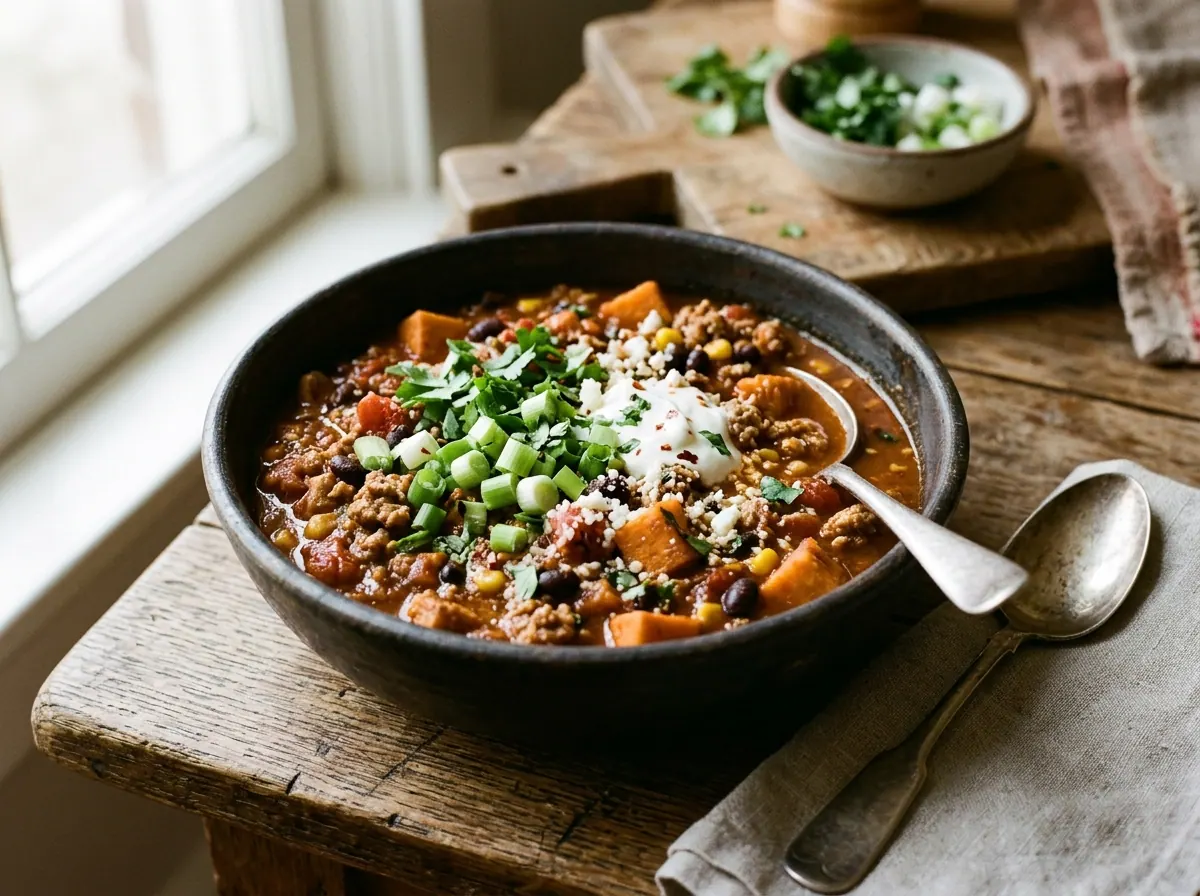
Total the ingredients in the soup you will eat, weigh the finished soup without its pot, then calculate: bowl calories = batch calories × bowl weight ÷ finished batch weight. This assumes your bowl has a similar mix of ingredients to the batch.
Why a bowl or ladle is not a fixed serving
Your favorite bowl can hold different amounts depending on how full you fill it. A ladle can also pick up mostly broth one time and more beans the next. Weighing the serving solves the first problem. Stirring and distributing the ingredients more evenly helps with the second, but weight alone cannot tell you what is inside each spoonful.
Start with a record of what went into your soup: edible vegetables, beans, meat, broth, cream, oil, or other ingredients. Keep each amount beside its nutrition source and preparation state. Include additions such as stock according to the product information rather than assuming every liquid contributes nothing.
Worked example: the same pot, two different bowls
These figures are invented to demonstrate arithmetic, not measured nutrition for a particular soup. Suppose your ingredient calculation gives 900 kcal and 45 g protein. Your finished edible soup weighs 1,500 g.
| Soup amount | Calories | Protein |
|---|---|---|
| 100 g | 60 kcal | 3 g |
| 300 g bowl | 180 kcal | 9 g |
| 450 g bowl | 270 kcal | 13.5 g |
The larger bowl is 450 ÷ 1,500 = 30% of this example batch. Its energy estimate is therefore 900 × 0.30 = 270 kcal. These numbers describe this fictional batch only; they are not a standard calorie value for soup.
Measure your batch in ForkMacros
- Open the recipe nutrition calculator and enter your ingredients.
- For a packaged ingredient, use its label serving weight and matching values in the custom-label form.
- Measure the finished soup in suitable containers on a tared scale. If necessary, weigh it in several transfers and add the weights.
- Enter the total in “Finished batch weight (g)” and your bowl in “Your portion weight (g).”
Measure food safely with equipment suitable for the temperature and weight. Do not place a heavy, hot pot on a scale that is not designed for it.
What if the soup reduces or you add water?
If the only change is water, a new batch weight changes the concentration per gram. For example, the same hypothetical 900 kcal in 1,800 g would be 50 kcal per 100 g. That does not mean you should use that weight for yesterday's batch. Weigh the actual food you are dividing, and recheck after a substantial change.
Removing meat, discarding broth, or leaving ingredients behind is different from changing only water. The simple portion tool cannot determine the nutrition removed. The raw and cooked weight guide explains why matching preparation states matters.
Can you calculate chunky soup this way?
You can make an estimate, but a broth-heavy bowl and a meat-heavy bowl need not have equal nutrition at equal weights. Divide the solid ingredients deliberately, or calculate distinct components separately. Add bread, grated cheese, or cream placed on your own bowl as separate items instead of dividing them across the whole pot.
Sources and calculation limits
- FAO: recipe composition calculations — background on recipe inputs, output weight, and losses.
- FDA: serving size on food labels — understanding the basis of packaged-ingredient values.
By ForkMacros. This educational worked example is not a tested recipe or a laboratory analysis. No clinical review is claimed. Our methodology describes the limits of the starter food records. For storing unequal servings, continue with meal-prep portions by weight.