 ForkMacrosTry the calculator ↗
Recipe calculations
How to Calculate Calories in Homemade Food by Weight
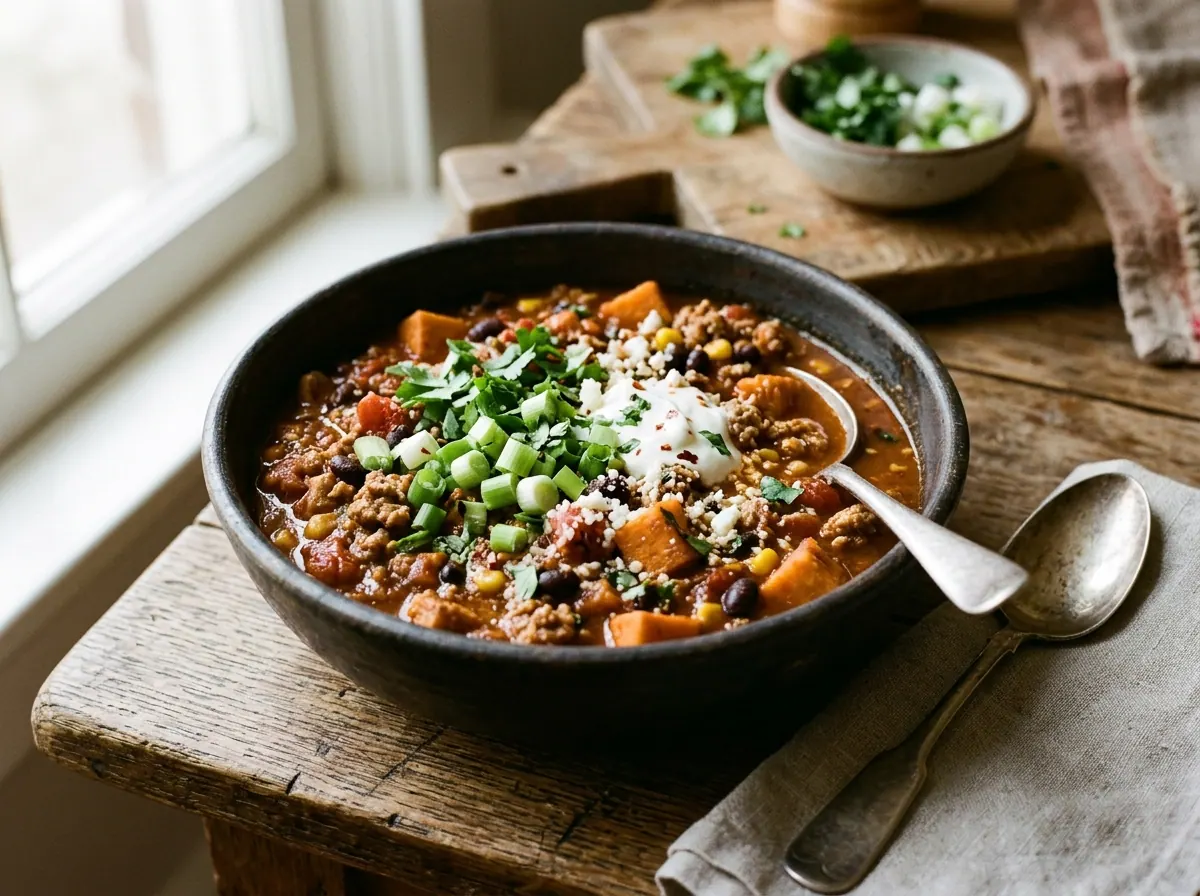
Calculate the nutrition of the ingredients that remain in your dish. Weigh the finished edible batch without its container. Divide the recipe totals by that weight, then multiply by the grams in your portion. This estimates an evenly mixed serving; it does not measure the food in a laboratory.
Start with the question your dinner actually asks
A recipe can say “serves four” while the containers in your fridge hold different amounts. A finished-batch weight gives you a way to estimate each container separately. You do not have to pretend that a small lunch and a large dinner are the same serving.
Keep two measurements separate: ingredient amounts tell you what entered the recipe; finished weight tells you how much prepared food you have to divide. Do not replace an ingredient’s raw weight with the weight of the cooked pot.
A worked example: one batch, three portion sizes
The following is an illustrative arithmetic example, not a tested recipe or a recommendation for how much to eat. Assume your ingredient calculation gives 1,620 kcal, 108 g protein, 180 g carbohydrate, and 52 g fat. After preparation, your edible batch weighs 1,800 g.
| Amount | Energy estimate | Protein estimate |
|---|---|---|
| 100 g | 90 kcal | 6 g |
| 250 g | 225 kcal | 15 g |
| 350 g | 315 kcal | 21 g |
| 500 g | 450 kcal | 30 g |
For the 350 g portion: 1,620 × 350 ÷ 1,800 = 315 kcal. For protein, apply the same fraction: 108 × 350 ÷ 1,800 = 21 g. Use that fraction separately for each nutrient rather than trying to infer all nutrition from calories alone.
Use ForkMacros for your own batch
- Open the recipe calculator and add your measured ingredients.
- Use “Add an ingredient from its label” if your exact product is missing. Enter the label’s gram serving and values on that same basis.
- In “Calories by cooked weight,” enter the finished edible batch weight.
- Enter the weight of your own portion to see its estimated calories and macros.
- Save the recipe to keep its ingredients and batch weight, or log the weighed portion in the meal planner.
Optional label nutrients left blank are unrecorded and contribute zero in this version. Their displayed totals can therefore be incomplete. Check your package rather than interpreting a missing value as proof that a food contains none.
Measure the food, not the cookware
Record the empty container weight before cooking, then subtract it from the filled weight. An alternative is to transfer the finished food into a clean container on a tared scale. Use suitable equipment and handle hot cookware safely. If your scale cannot hold the whole batch, weigh the food in several transfers and add those weights.
Know when the simple method is less reliable
Water can change the weight and therefore the concentration per gram. Discarded oil, drained liquid, bones, and food left behind can also change which nutrients you actually eat. A weight ratio alone does not estimate those losses. The FAO recipe-composition method discusses yield and nutrient-retention adjustments; ForkMacros’ simple portion tool does not apply a full retention model.
An evenly stirred soup is easier to portion by weight than a dish with whole chicken pieces in a separate sauce. If different portions contain very different ingredients, calculate those components separately. Reweigh a fresh batch rather than assuming it always finishes at exactly the same weight.
Keep the method repeatable
Write down the ingredient brands and whether each amount was measured raw, cooked, or drained. These details are more useful when repeating the calculation than recording an extra decimal place. Use the raw versus cooked weight guide when selecting a database entry.
Sources and limitations
- FAO: calculating the composition of dishes prepared from recipes — background on finished weight, yield, and retention.
- FDA: serving size on the Nutrition Facts label — understanding the serving basis on packaged ingredients.
Prepared by ForkMacros as an educational calculation guide. No independent clinical review is claimed. The bundled reference food records still require independent verification; use verified product labels where available. Read our methodology and nutrition disclaimer.