 ForkMacrosTry the calculator ↗
Recipe calculations
Homemade Chili Calories per 100g: Calculate Your Own Batch
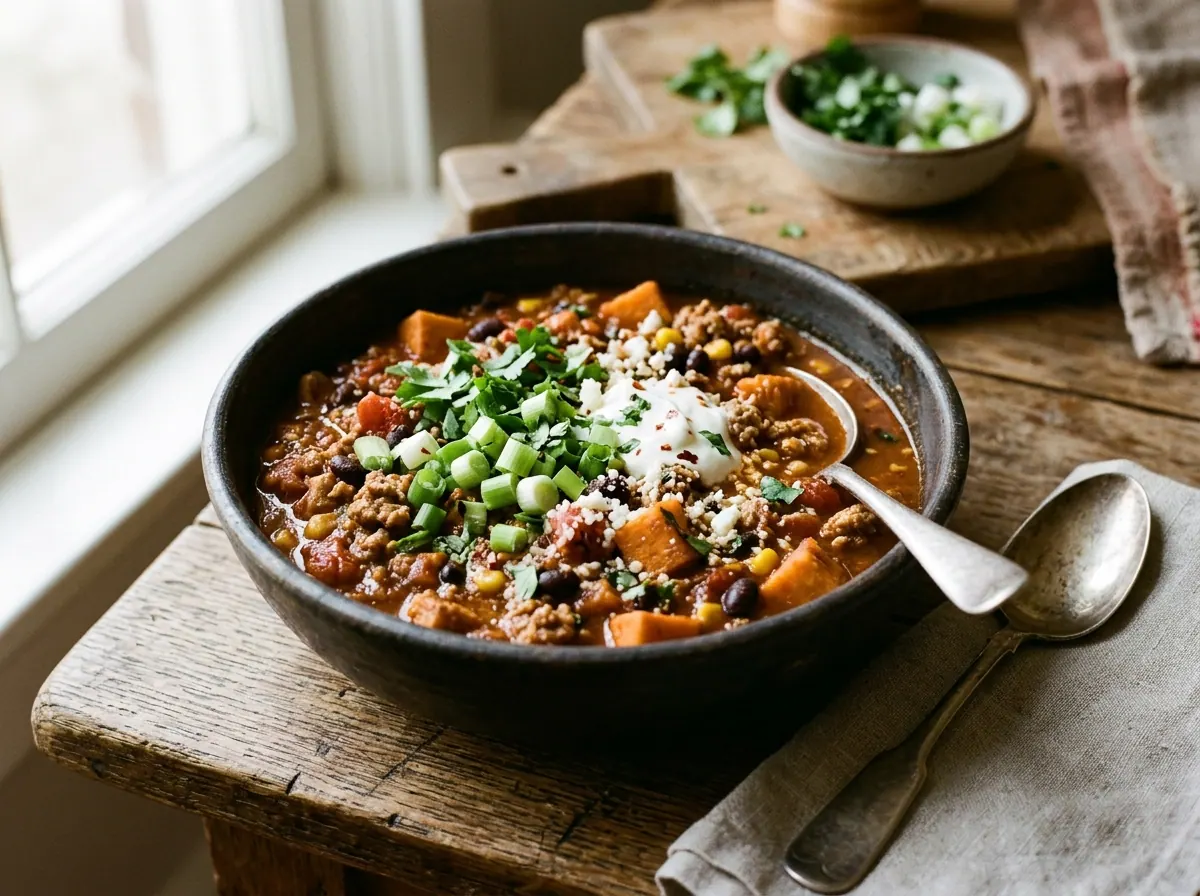
There is no single calorie value for every homemade chili. Calculate your ingredients, weigh the finished batch, and divide its calories by its finished grams, then multiply by 100. Weigh your serving to scale that estimate to your plate.
Start with your recipe rather than a generic cup of chili
A chili made with a different meat, bean product, sauce, or amount of oil is a different calculation. You do not need to find a generic chili entry that happens to look similar. Instead, create a recipe from the ingredients and quantities you used.
Give the saved recipe a descriptive name, such as “turkey and bean chili — label values.” Note the product brands separately if you want to repeat the calculation later. If you change an ingredient or make a new batch, check the inputs and finished weight again.
Worked example: calories and protein per 100g
This is a fictional calculation, not a tested chili recipe. Suppose the ingredients total 1,800 kcal and 120 g protein, and the finished edible chili weighs 2,000 g.
| Amount | Calculation | Estimate |
|---|---|---|
| 100 g | 1,800 × 100 ÷ 2,000 | 90 kcal |
| 350 g | 1,800 × 350 ÷ 2,000 | 315 kcal |
| 500 g | 1,800 × 500 ÷ 2,000 | 450 kcal |
Apply the same portion fraction to protein: 120 × 350 ÷ 2,000 = 21 g protein in the hypothetical 350 g serving. Your own ingredient totals may be very different. Neither this table nor an image of chili establishes nutrition for your recipe.
Check three ingredients before you calculate
- Meat: match the entry to the cut, fat description, and state you weighed. A cooked entry should not receive an extra raw-to-cooked adjustment.
- Canned ingredients: check whether the label or database record describes the food with liquid or drained. Use an amount on the same basis.
- Oil and additions: include what you add, and treat discarded fat or liquids as a calculation limitation rather than assuming they were all eaten.
USDA cooking-yield research distinguishes moisture and fat changes. A finished-batch weight does not, by itself, identify the nutrients left in a pan or drained away.
Add toppings to the person who eats them
If sour cream or cheese is mixed into the entire batch, include it in the batch and then measure the finished output. If it goes on one bowl, keep it separate. For example, a hypothetical 315 kcal chili serving plus a topping whose label calculation gives 60 kcal makes a 375 kcal estimate. Do not add the topping to the pot calculation and then add it to the bowl a second time.
The same applies to rice, bread, or tortilla chips served beside the chili. A meal total is the sum of its separately calculated components.
Use the calculator without guessing a cup weight
In ForkMacros' weighed-portion tool, add the ingredients, enter the finished batch weight, and weigh the amount on your plate. If a product is missing, copy its label values using one consistent gram-serving basis. Check the recorded nutrients; an optional field left blank does not establish that the nutrient is absent.
Mix the chili and divide its ingredients reasonably evenly. A serving containing more meat or beans than the batch average can differ from the estimate. Read the general cooked-weight method for the full arithmetic.
Sources and limits
- USDA: cooking yields — measured changes in meat and poultry weight, moisture, and fat.
- FDA: serving information — identifying the label serving basis.
Prepared by ForkMacros as an educational example. No independent clinical review or laboratory verification is claimed. Use suitable food records and verified package values; see the methodology. Our cooking oil guide covers a common missing input.